
Reinventing How You Clean Your Restrooms
Executive Summary
Restroom cleanliness directly shapes how people judge a business — a Bradley Corp survey found 64% of Americans choose businesses based on restroom cleanliness, and a Cintas-commissioned Harris Poll found 90% think employers who deep clean restrooms care more about health and wellness. Independent lab testing found Kaivac's No-Touch Cleaning® system removes 98% of urine residue from tile floors, while traditional string and microfiber mops left 12-13 times more residue on tile surfaces and 30 times more in grout lines. Reinventing restroom cleaning around true soil removal — rather than the standard mop-and-bucket toolset — improves both the customer experience and the cleaning worker's health and dignity.
The Restroom Message
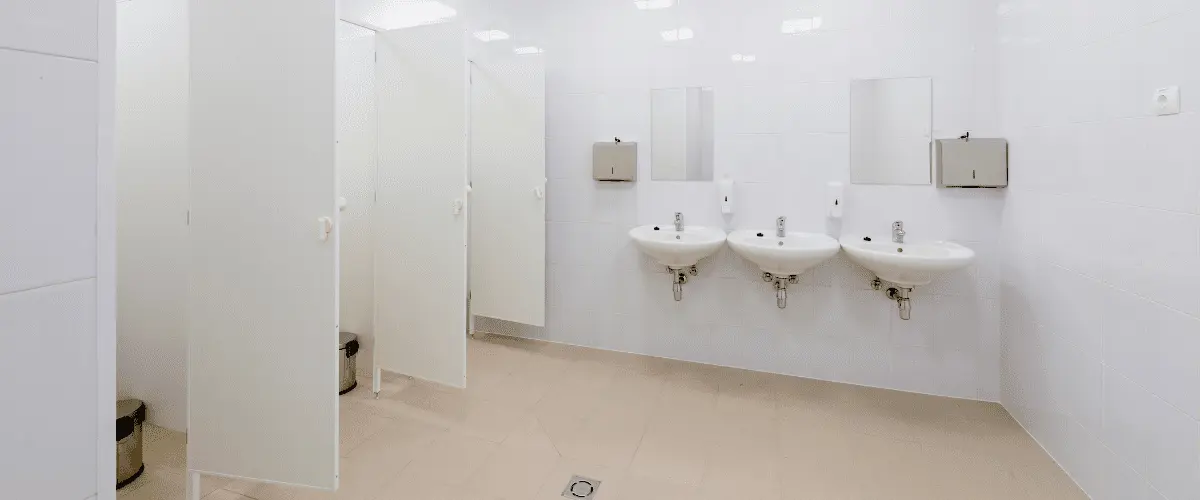
Restrooms talk. Whatever the facility size, purpose, age, or usage, restrooms talk to everyone who enters. They tell a story about the facility’s cleanliness, priorities, and attention to detail. They tell you whether the people who clean them do so with care and professionalism or with frustration and rushed disgust. When restrooms are consistently clean, they portray a commitment to safety, health, and a pleasant environment.
Additionally, when restrooms talk, people listen, as shown by the 2019 Annual Handwashing Survey by Bradley Corp. For retail and restaurant facilities, the survey says 64% of Americans will choose a business based on restroom cleanliness. Furthermore, clean restrooms also impact schools In fact, 68% of high school students say dirty restrooms reflect poorly on school management.
The Restroom Investment
From the moment they are built, restrooms are costly and concerning. For most facilities, restrooms represent the highest construction costs per square foot. They often include expensive surfaces, mirrors, and fixtures. Furthermore, once built, they require 60% of all supplies in a building and cost the most to clean. Restrooms also draw the most complaints, making them a necessary drain on energy, time, and resources.
Beyond costs that can be counted, restrooms also impact facility image and occupant wellbeing. In the Covid era, customers and employees alike pay closer attention to restroom cleanliness. A 2020 Harris Poll conducted on behalf of Cintas indicates that 90 percent of Americans think employers who regularly deep clean their workplace restrooms care more about their health and wellness than those who don’t. Maintaining restrooms has always been a challenge, but in the current climate, the stakes are higher than ever.
The Standard Toolset for Restroom Cleaning
Mop and bucket, spray bottle and cloth, toilet brush – facility managers deploy this standard toolset to clean restrooms every day. It’s worth asking if the standard tools are equipped for success. To answer that, let’s revisit the goal – what is cleaning? And how do we know a space is clean?
Cleaning & Maintenance Management Magazine offers this definition:
Cleaning is the removal of visible and invisible soil through mechanical and manual processes. Dr. Michael Berry
Let’s break that down. Soil includes dirt, bodily fluids, bacteria, viruses, biofilm, and even chemical residue. Some of that soil is visible; much of it isn’t – especially the harmful ones. The keyword in this definition is the action word – removal. Cleaning requires the removal of unwanted matter both visible and invisible from all restroom surfaces.
Let’s take that definition to our standard toolset, starting with a mop and bucket. Is a mop a tool for removal? Can you picture it? Is it removing the visible soils or just spreading them around? What about invisible bacteria and pathogens? Now picture a wet vacuum. Can you picture the removal now? Effective restroom cleaning must put removal at the forefront, and the most effective way to do that is with wet vacuum recovery.
Leaving Your Restroom Cleaner than Mopping
Kaivac No-Touch Cleaning® systems don’t just paint the floor like a mop or rely on the limited absorbent capacity of a microfiber pad. They take the capacity for removal into the gallons. Instead of wiping by hand, a spray nozzle allows the worker to keep their distance from contaminated surfaces. First, a cleaning worker sprays down fixtures with clean solution. Then they rinse with water at a higher pressure, dislodging soils and odor-causing bacteria and sending them to the floor. Lastly, they use the vacuum wand to remove the soiled solution from the floor. The KaiVac® 1750 No Touch-Cleaning system captures soiled solution in a 17-gallon tank, separate from the clean solution. This process results in soil removal well beyond traditional cleaning methods, and scientific testing validates that.
One laboratory test examined the difference between cleaning with a string mop, a flat mop, and a Kaivac No-Touch Cleaning system. The No-Touch Cleaning system removed 98% of urine residue from tile floors – both from the smooth tile surface and from the grout line. Mops left 12-13 times the amount of urine residue on the tile surface and 30 times more residue in the grout line. Many people believe that microfiber flat mops solve the problems inherent with string mops. However, flat mops only performed minimally better than string mops. Not only were both mops less effective at removing unwanted matter, but they deposited soils into the porous grout lines, leaving the floors significantly contaminated after cleaning.
The Worker Perspective on Restroom Cleaning
Of course, the standard toolset doesn’t clean a restroom alone. They are wielded by a cleaning worker. What is the worker’s experience using those tools? They kneel in front of the toilet to wipe it down, their faces coming very close to contaminated surfaces. They twist their bodies, arms, and wrists to drag a wet mop across the floor. Do they feel safe on the job? Do they feel good in their bodies while using these tools? Beyond the worker’s personal sense of wellbeing, do they feel good about the work they’ve accomplished? Do they believe that they are making a difference?
It may seem unavoidable that restroom cleaning is unpleasant. It has always been unpleasant. At least, that’s the way it’s always been done. But the old way has also led to restrooms being a magnet for costs and complaints. What if the job were easier and more comfortable for the worker? What if the results consistently met a higher standard.
At its worst, cleaning work can chip away at people. When workers are being asked to provide top quality cleaning without receiving the tools and support they need, they can quickly lose passion for what they’re doing. Employee empowerment starts with a renewed commitment to do the right thing. When we start by thinking about the worker and what the ask is, and then we support them, train them, and advise them, the sky is the limit. What I have watched an empowered worker accomplish is nothing short of amazing. Mike Perazzo, Kaivac VP of Business Development
Empowering Workers When Cleaning Restrooms
Here’s an alternative scenario: the worker stands upright, away from contaminated surfaces, and blasts soil and bacteria down to the floor with a spray nozzle. The system automatically measures and dilutes the chemical, preventing error or injury during mixing. The worker maneuvers the lightweight wand around partitions and fixtures, capturing the soiled solution. The system is even equipped with an onboard training system. This means the worker can refresh their memory at any point on how to use it for best results. How will this worker feel at the end of the day compared to the worker using the standard tools?
The cleaning industry often sees high turnover rates and low employee loyalty. But the no-touch approach sets a new standard for the professional cleaning experience. Workers should not have to be uncomfortable and at risk on the job. Not when they could be cleaning comfortably and more effectively at the same time.
Reimagining Restroom Cleaning
When it comes to cleaning restrooms, a little imagination goes a long way. First, imagine that maintaining restrooms can be better. The worker can be happier. The space can be cleaner and healthier. The maintenance can be more cost-effective, and the customer can be more satisfied. By discarding the standard toolset and embracing a process centered on removal of soil and respect for the worker, facility managers can reimagine and reinvent their restroom cleaning program.
Frequently Asked Questions: Reinventing Restroom Cleaning
How much does restroom cleanliness influence whether customers choose a business? A lot. A 2019 Bradley Corp Annual Handwashing Survey found 64% of Americans will choose a retail or restaurant business based on restroom cleanliness, and a separate Cintas-commissioned Harris Poll found 90% believe employers who regularly deep clean workplace restrooms care more about employee health and wellness.
How much more urine residue do mops leave behind compared to No-Touch Cleaning? Independent lab testing found that string and microfiber flat mops left 12-13 times more urine residue on tile surfaces and 30 times more residue in grout lines than Kaivac's No-Touch Cleaning system, which removed 98% of urine residue from both surfaces.
Why is a mop considered ineffective by the industry definition of "cleaning"? Cleaning & Maintenance Management Magazine defines cleaning as the removal of visible and invisible soil, but mops mainly spread dirty water across surfaces rather than removing it. A wet vacuum recovery system puts actual removal at the center of the process, which is why it outperforms mopping on lab-tested soil removal.
How does No-Touch Cleaning protect workers compared to traditional mopping? With No-Touch Cleaning, workers stand upright and spray, rinse, and vacuum restrooms from a distance instead of kneeling close to contaminated surfaces or twisting their bodies to drag a mop. The system also auto-doses chemicals and includes onboard training, reducing both physical strain and mixing errors.
Recommended Kaivac Solutions for Reinventing Restroom Cleaning
To reinvent restroom cleaning around true soil removal, Kaivac recommends:
- Kaivac No-Touch Cleaning® Systems: The spray, rinse, and vacuum soil-removal process central to this article's argument.
- KaiVac 1750: The specific model referenced in the article's lab-test discussion, with its 17-gallon soiled-solution tank.
- KaiTutor™ Digital Training: Matches the article's onboard-training and worker-empowerment discussion for ongoing operator education.
Related Posts

Introducing: See the Difference in 60 – A No-Cost Pilot Program for School Districts
Are you curious about what a
Read more
Cherokee County School District Takes Cleaning into Their Own Hands With Kaivac
Each of the district’s six high schools maintained their restrooms with a No-Touch Cleaning system from Kaivac.
Read more