
How to Maintain Your Restroom Cleaning Machine
Executive Summary
Proper maintenance of a Kaivac No-Touch Cleaning machine comes down to four simple tasks: empty and rinse the vacuum tank daily, inspect the HEPA filter monthly, check the squeegee head weekly, and practice opportunity charging with the lithium-ion battery. Following this schedule prevents odors, maintains vacuum performance, and extends the life of the machine.
-----
The Kaivac No-Touch Restroom Cleaning Machine offers a ton of benefits for facility managers and maintenance crews alike. The machine cleans restroom fixtures, surfaces, and floors faster and more completely than a bucket and mop without the risk of dangerous cross-contamination. Workers armed with the machine no longer have to bend, twist, or get on all fours, lowering the chance of painful, career-shortening musculoskeletal disorders.
And perhaps best of all, using a No-Touch restroom cleaning machine means never touching soiled, disgusting surfaces. This elevates the job and takes big strides toward making workers feel empowered and valued.
But consistently achieving these results requires a little bit of maintenance. Here’s how to keep your No-Touch restroom cleaning machine in top working order.
Empty and Rinse Everyday
The Kaivac No-Touch restroom cleaning machine works by first spraying water and chemical on surfaces and then blasting those surfaces with a high-pressure, freshwater rinse. Finally, workers use the machine’s powerful vacuum to suck up the slurry of water, chemical, and dirt.
But what to do with that dangerous, smelly soil now captured in the machine’s vacuum tank?
Dump it. It is vital to empty and rinse your restroom cleaning machine every day or the tank will start to stink. The attached dump and drain hose makes emptying the vacuum tank into a floor sink quick and easy. Once the vacuum tank is empty rinse it out with fresh water.
Pay extra attention to rinsing the float cage inside the vacuum tank. A float screen clogged with debris will affect vacuum performance so be sure to rinse it well. Wiping down the system with a cloth will remove any water, chemical, or dirt and keep your restroom cleaning machine looking good.
Inspect the HEPA Filter Monthly
To protect indoor air quality, the No-Touch restroom cleaning machine comes with a HEPA or high-efficiency particulate absorbing filter on the vacuum’s exhaust. Inspect this vital piece of equipment monthly to keep it and the system in good working order.
Start by emptying both the freshwater tank and the vacuum tank before inspecting the filter. Use the vacuum hose to suck the water out of the freshwater tank. Follow the directions above to empty the vacuum tank.
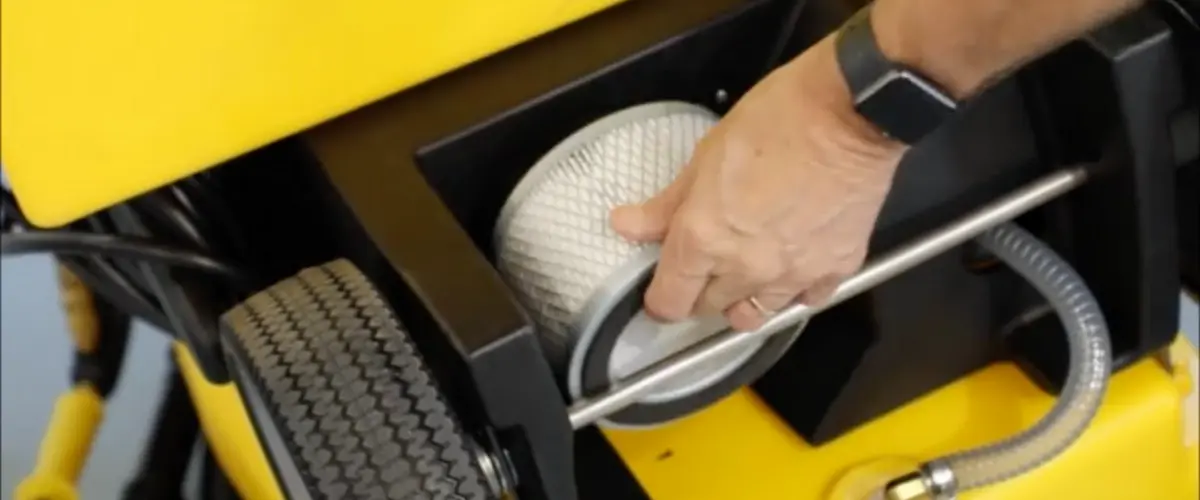
Then tip the restroom cleaning machine forward to easily access the HEPA filter (don’t forget to lock the wheels to keep the system from rolling during the tipping process). Find the HEPA filter on the bottom of the machine’s black box assembly and remove the exhaust cover. Unscrew the retainer ring and remove the HEPA filter.
Inspect the filter for any buildup of soil, dust, or debris. If it looks good simply put it back and reattach the retainer ring and exhaust cover. If it seems dirty or damaged replace it. Expect to replace the HEPA filter every three to six months.
Inspect the Squeegee Head Every Week
As the only component of your No-Touch restroom cleaning machine that actually touches surfaces, the two-sided squeegee head gets a lot of wear and tear. Operators use the brush side to scrub away stubborn, stuck dirt then flip over to the squeegee to slide across the floor and direct dirty water into the vacuum hose.
That heavy use means the squeegee head will eventually wear. Operating the No-Touch system with a damaged or worn squeegee head will significantly affect performance so it is vital to inspect this component weekly.
Replacing a worn or broken squeegee head is as simple as unscrewing the component from the vacuum wand and screwing on a new one. Expect to change the squeegee head every three to six months, more often if the machine sees extra heavy use.
Charge that Battery Anytime
Sourcing batteries for jan/san equipment during the pandemic has been difficult at best. This crisis means operators are doing what they can to stretch battery life as far out as possible.
Luckily, the No-Touch restroom cleaning machine from Kaivac comes equipped with a lithium-ion battery. This state-of-the-art battery starts with a much longer lifespan than other types. It can also be plugged in whenever the machine is not in use, a practice known as opportunity charging, without shortening battery life.
In fact, Kaivac recommends charging your lithium-ion battery anytime the machine is not in use to ensure that your No-Touch system is always ready to clean.
There are two ways to charge the lithium-ion power pack. Operators can slide the power pack off the machine and onto a wall-mounted charging unit. Or they can use a standard outlet with a power cord plugged into the battery’s charging port.
It will take about three hours to charge from a complete discharge, but the battery can stay on the charger longer without risk of damage.
While lithium-ion technology is very robust, these batteries can be damaged by extreme temperatures. Store the powerpacks in a dry area with temperatures between 40°F and 80°F for the longest life.
Frequently Asked Questions: Maintaining Your Restroom Cleaning Machine
How often should you empty a no-touch restroom cleaning machine? The vacuum tank should be emptied and rinsed every single day to prevent odors from developing. Pay special attention to rinsing the float cage, as a clogged float screen will reduce vacuum performance.
How do you inspect the HEPA filter on a Kaivac machine? Tip the machine forward (with wheels locked), remove the exhaust cover, unscrew the retainer ring, and pull out the HEPA filter. Check for soil or debris buildup. Replace the filter every three to six months, or sooner if damaged.
How often should you replace the squeegee head on a no-touch cleaning machine? Inspect the squeegee head weekly and replace it every three to six months. Machines that see extra heavy use may require more frequent replacement. A worn squeegee head significantly reduces cleaning performance.
Can you leave a Kaivac lithium-ion battery on the charger? Yes. Kaivac recommends opportunity charging—plugging in the battery anytime the machine is not in use. The battery takes about three hours to fully charge and can remain on the charger without risk of damage.
What temperature should Kaivac battery packs be stored at? Store lithium-ion power packs in a dry area between 40°F and 80°F. Extreme temperatures can damage the battery and shorten its lifespan.
Recommended Kaivac Solutions for Machine Maintenance
To keep your No-Touch system running at peak performance, Kaivac recommends:
- Kaivac No-Touch Cleaning Systems: The 1750 and 2150 models are the industry standard for restroom cleaning.
- Replacement Squeegee Heads: Stock replacement squeegee heads to swap in when wear is detected during weekly inspections.
- HEPA Filters: Keep spare HEPA filters on hand for the monthly replacement cycle to maintain indoor air quality.
- Lithium-Ion Power Pack: Replacement battery packs ensure your machine stays operational during back-to-back shifts.
Follow these tips to keep your Kaivac No-Touch restroom cleaning machine in good working order. Find out more about the benefits of No-Touch Cleaning here.
Related Posts

Introducing: See the Difference in 60 – A No-Cost Pilot Program for School Districts
Are you curious about what a
Read more
Cherokee County School District Takes Cleaning into Their Own Hands With Kaivac
Each of the district’s six high schools maintained their restrooms with a No-Touch Cleaning system from Kaivac.
Read more