
Top 3 Public Restroom Hygiene Hazards

Executive Summary
The three biggest public restroom hygiene hazards are offensive odors caused by bacteria in porous grout, fecal-oral disease transfer from contaminated hands touching surfaces, and cross-contamination spread by improper cleaning tools. Traditional mopping worsens all three problems. Kaivac No-Touch Cleaning systems eliminate these hazards by removing soils and pathogens without spreading them to other areas.
-----
Whether you are in charge of restroom sanitation for a large school system or commercial facility, the dangers of contamination exist on all fronts. Careless restroom users present just one set of challenges. But your organization’s cleaning system may create many public restroom hygiene hazards that can, and should, be avoided.
Here are the three of the biggest public restroom health hazards for your concern, and how to create a safer environment in your restrooms.
1. Offensive odors
Intense odors quickly make public restrooms unpleasant and undesirable. But what is causing the smell should be more of a concern to everyone. Especially school district officials and administrators.
The situation in US school restrooms is “nothing short of a national disaster,” according to Dr. Tom Keating of Citizens, Learners and Educators Against Neglect (CLEAN). CLEAN is dedicated to the health and safety of school restrooms.
A big part of the problem is ignoring the cause of offensive odors. Instead of masking the smell with perfume sprays, cleaning staffs should address the cause of these odors. Surprisingly, these smells aren’t caused by a lack of cleaning, but using the wrong cleaning tools.
Offensive odors indicate the presence of potentially harmful bacteria festering in the school’s restrooms. This bacteria tend to live in porous grout, feed on urine and create bad smells. Cleaning with a bucket and mop doesn’t remove the bacteria from grout but deposits dirty water directly onto it. This feeds the bacteria, allows it to grow and encourages more smells.
2. Fecal-oral disease transfer.
After a visit to a contaminated public bathroom, users may end up with microscopic fecal matter on their hands without knowing it. These contaminated hands then go on to touch everything from stall doors to air dryers to soap dispensers and restroom doors.
If that person touches his or her mouth, eyes or nose with a contaminated hand, there’s the possibility of fecal-oral disease transfer, one of the most common forms of disease transfer.
Worst of all, restroom users who enter just to look in the mirror or get a paper towel may end up contacting a door handle, faucet handle or another of these highly contaminated surfaces without thinking to wash their hands. They are now just a susceptible to possible fecal-oral transfer.
3. Potential for cross-contamination.
Poor cleaning practices are often the cause of the third and no less dangerous of the restroom health hazards. It makes sense that contaminants make their way to the floors and surfaces of public restrooms. But those restroom contaminants are tracked to other areas of the building when they are not cleaned properly, which puts all of the occupants at risk.
Even worse, unaware cleaning workers often reuse their cleaning tools in other areas of the building. This practice can spread restroom germs and soils even further through the space.
Frequently Asked Questions: Public Restroom Hygiene Hazards
What causes bad smells in public restrooms? Offensive odors are caused by bacteria living in porous grout that feed on urine. Traditional mopping makes the problem worse by depositing dirty water directly into the grout, which feeds the bacteria and encourages more odor-producing growth.
How does mopping contribute to restroom odors? A bucket and mop spread dirty water across the floor, pushing bacteria and urine deeper into porous grout rather than removing them. The bacteria then feed on the organic matter and produce foul-smelling gases. This creates a cycle where mopping actually worsens the odor problem.
What is fecal-oral disease transfer in restrooms? Fecal-oral disease transfer occurs when microscopic fecal matter gets on hands from contaminated restroom surfaces (door handles, faucets, dispensers) and then enters the body through the mouth, eyes, or nose. Even brief visitors who don't use the toilet can pick up pathogens from contaminated surfaces.
How can you prevent cross-contamination during restroom cleaning? Switch to a cleaning method that contains soils at the source. No-Touch Cleaning systems apply chemicals, rinse with high-pressure water, and vacuum everything into a sealed tank—eliminating the need to move contaminated water or tools to other areas of the building.
How much more effective is no-touch cleaning at removing bacteria from grout? Studies show that Kaivac No-Touch Cleaning systems are 30 to 60 times more effective at removing bacteria from grout than traditional mops. They fully remove the offending bacteria and the odors they create, rather than feeding the problem.
No-Touch Cleaning
Research by environmental health scientists suggests that a public restroom is a high-risk environment. This calls for an ideal cleaning method that allows staff to enter restrooms, sanitize surfaces and floors, then leave without bringing the pollutants to other parts of the building.
Kaivac No-Touch Cleaning includes a system of chemical metering and injection, an indoor pressure washer, and a powerful wet vacuum in a single package. This allows workers to clean restrooms quickly and completely, with no risk of cross-contamination.
In fact, studies show these systems are 30 – 60 times more efficient at removing bacteria from grout than mops.
No-Touch Cleaning systems even works on grout, fully removing offending bacteria and the bad smells they create.
Recommended Kaivac Solutions for Restroom Hygiene
- Kaivac No-Touch Cleaning Systems (1750 and 2750): The 1750 and 2750 models eliminate cross-contamination by containing all soils in a sealed vacuum tank.
- Kaivac KaiBosh™ Disinfectant: A concentrated, hospital-grade disinfectant effective against fecal-borne pathogens and bacteria found in restroom grout.
- Kaivac AutoVac Stretch™: For maintaining clean floors in high-traffic areas outside the restroom, preventing tracked contaminants from spreading through the facility.
Public restrooms present many health hazards, and it’s vital to minimize the risk of contamination through proper public restroom hygiene. To learn more about Kaivac’s approach to restroom cleaning, click here.
Related Posts

Introducing: See the Difference in 60 – A No-Cost Pilot Program for School Districts
Are you curious about what a
Read more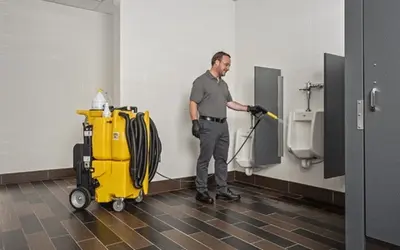
Cherokee County School District Takes Cleaning into Their Own Hands With Kaivac
Each of the district’s six high schools maintained their restrooms with a No-Touch Cleaning system from Kaivac.
Read more