
Nature Calls: Clean Park Restrooms
Executive Summary
Clean park restrooms directly drive park usage — people won't linger in public space, especially in multigenerational groups, without a restroom they trust, and 42% of San Francisco park users named cleanliness as their single biggest restroom complaint. Rocky Mountain National Park employs a dozen full-time summer custodians for 267 toilets, some reached only by hiking in with llamas. Park cleaning also carries unique constraints: environmental sensitivity, vault and composting toilets, remote access, and thin staffing. Kaivac's No-Touch Cleaning® system removes over 99.9% of targeted bacteria with plain tap water — making it viable in sensitive areas — while working 60 times more effectively and two to three times faster than mops.
Clean park restrooms are not a luxury. Yes, outdoor spaces give us the opportunity to rough it, step away from our built environments and connect with nature. However, humans still need restrooms and we demand that they are clean. National park managers leverage this by boasting about their impeccable facilities. ‘The most important job in the park is cleaning the toilets—so our visitors have told us,’ according to the Rocky Mountain National Park website. To that end they employ a dozen full-time custodians to clean the 267 toilets every day during the busy summer season.
Not every operation is as vast as a national park. But even small neighborhood greenspaces, walking and biking trails and large city commons benefit from clean park restrooms.
Park Restrooms Make the Outdoors Accessible to All
Providing restrooms in parks makes them more accessible and welcoming, which boosts park usage. People are more comfortable spending time away from home if they are confident that there is a comfortable, clean, working restroom nearby according to Recreation Management Magazine. They find that a park’s usage can be influenced by the availability of the restroom.
Carol McCreary, program manager for Public Hygiene Lets Us Stay Human (PHLUSH), a Pacific Northwest-based advocacy group focused on access to public restrooms agrees. ‘Knowing that there’s a restroom there supports you physically and puts your mind at ease,’ McCreary states in an article for Pew Trust. ‘People will not congregate in multigenerational groups in public space unless the restroom is there.’
This can be especially true for people with certain health conditions. There is even evidence, according to the American Restroom Association, that shows some people, for instance a person with hypertension who was prescribed diuretics and walking, may hesitate to participate in outdoor fitness activities that put them out of range of toilets.
Keeping them Clean
The setting may be rustic but restroom cleanliness is just as vital in parks as in any other public space. To the users, poorly maintained facilities are as bad, or perhaps worse, than no facilities at all. A study conducted by the San Francisco Neighborhood Parks Council (SFNPC), found that 42 percent of those surveyed cited cleanliness as the single biggest problem with San Francisco park restrooms. Sixty percent of those surveyed rated their overall park restroom experience as very unpleasant or unpleasant.
Luckily, cleaning park restrooms isn’t much different than other public restrooms. These structures are normally constructed with robust, easy-to-maintain materials like concrete and fiberglass reinforced panels. Inside, stainless steel fixtures make them low maintenance and vandal resistant.
Unique Challenges of Cleaning Park Restrooms
There, however, some important differences with park restrooms to keep in mind:
- Environmentally sensitive areas: Workers should limit chemical use when cleaning restrooms and showers in national parks and other sensitive areas to protect water, plants and aquatic life. An EPA study suggests choosing the safest and ‘greenest’ janitorial products with a proven record in commercial operations.
- Different toilet technology: The more remote the area the less likely there will be a flush toilet. Don’t let a vault toilet, chemical toilet or composting toilet put you off. Maintenance priorities may look a little different–insect control, for instance, becomes paramount—but cleaning procedures look the same.
- Hard-to-reach locations: Some isolated back country restrooms require extreme, and extremely cute, effort to reach. Rocky Mountain National Park has employees who spend as much as 75% of their time during the summer hiking with two llamas to remote, solar-powered composting toilets to shovel them out and pack out the waste.
- Limited personnel: Providing clean, well maintained restrooms takes staff time. Budget shortfalls, government furloughs and deferred maintenance schedules stress these resources. The most extreme examples happened at National Parks during the 2018-2019 government shutdown. U.S. News reports that human feces and overflowing garbage are overwhelming some of the country’s most iconic natural treasures.
Kaivac Makes it Easy
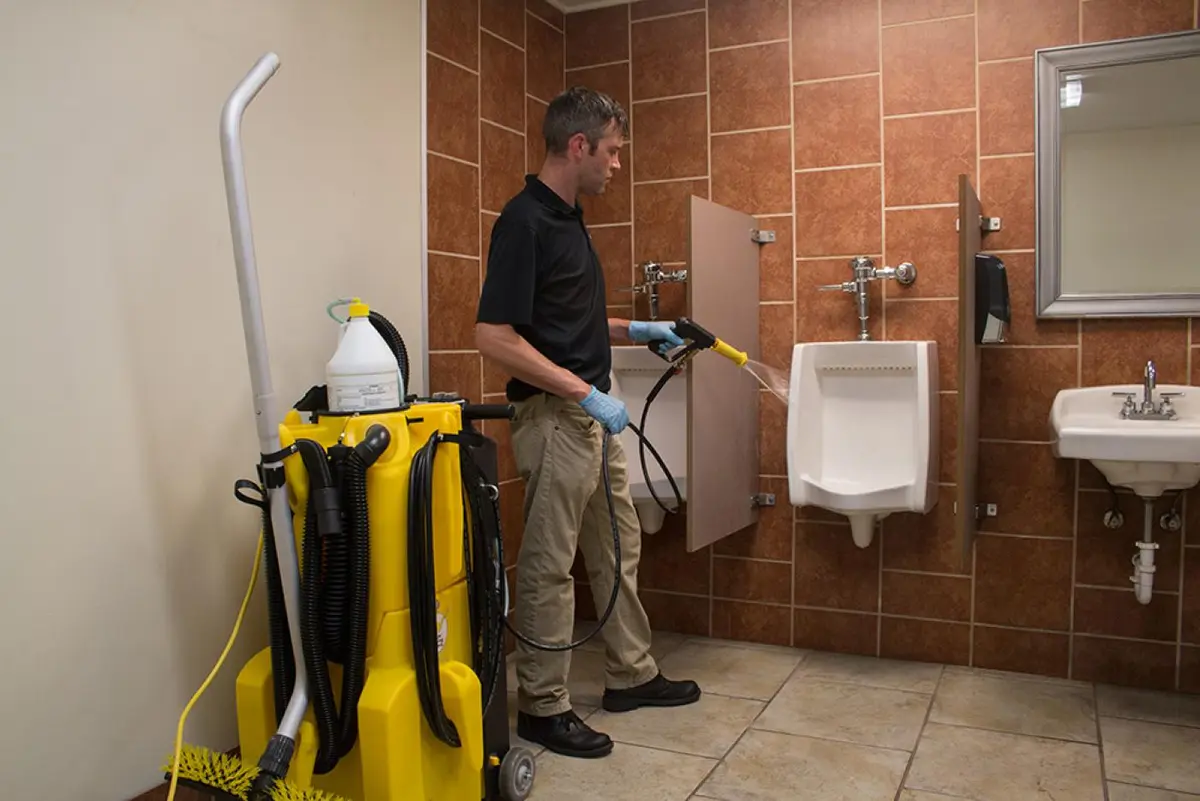
No matter the park restroom cleaning task, a Kaivac No-Touch Cleaning System can make the job easier, faster and more complete. The technology is 60 times more effective at removing soils and bacteria than traditional mops, buckets and rags. It works in one half to one third of the time so staff can be more efficient.
A No-Touch Cleaning System removes more than 99.9% of targeted bacteria with just plain tap water, meaning you can use it in environmentally-sensitive areas. Simply spray water, or diluted cleaning solution if appropriate, on fixtures and floors, rinse with fresh water and vacuum the floors dry. It’s also great for shower stalls and dressing areas. An on-board trash compactor can reduce trash volume by a third or even a half.
For the more remote areas, try a battery-operated model. This rechargeable technology allows you to cut the power cord and clean almost anywhere…but probably not places only accessible by llama!
Frequently Asked Questions: Cleaning Park Restrooms
Do clean restrooms actually affect how much a park gets used? Yes. Recreation Management Magazine found a park's usage can be directly influenced by restroom availability, and PHLUSH program manager Carol McCreary notes that "people will not congregate in multigenerational groups in public space unless the restroom is there." People with health conditions — like someone prescribed both diuretics and walking — may skip outdoor activity entirely without nearby facilities.
How bad is the park restroom cleanliness problem? A San Francisco Neighborhood Parks Council study found 42 percent of those surveyed cited cleanliness as the single biggest problem with San Francisco park restrooms, and 60 percent rated their overall park restroom experience as unpleasant or very unpleasant. To users, a poorly maintained facility can be worse than no facility at all.
What makes cleaning park restrooms different from other public restrooms? Four factors: environmentally sensitive locations that require limiting chemical use to protect water, plants, and aquatic life; non-flush toilet technology like vault, chemical, and composting toilets that shift maintenance priorities toward insect control; hard-to-reach backcountry locations; and limited personnel strained by budget shortfalls and deferred maintenance.
Can restrooms be cleaned effectively without chemicals in environmentally sensitive areas? Yes. A Kaivac No-Touch Cleaning System removes more than 99.9% of targeted bacteria using just plain tap water, so it can be used where chemical runoff is a concern. Workers spray water (or diluted solution where appropriate) on fixtures and floors, rinse with fresh water, then vacuum the floors dry.
Recommended Kaivac Solutions for Park Restroom Cleaning
For parks and recreation operations facing the constraints covered in this article, these Kaivac products apply:
- Kaivac No-Touch Cleaning® System — the water-based system behind this article's 99.9% bacteria removal and 60x effectiveness claims, suited to environmentally sensitive parks.
- KaiVac 1250 — Kaivac's most portable No-Touch system, sized for the smaller restroom buildings (up to 25 fixtures) typical of parks and trailheads.
- KaiO™ Multipurpose Cleaner — general-purpose concentrate for park restrooms where a diluted cleaning solution is appropriate alongside water-only cleaning.
Related Posts

Introducing: See the Difference in 60 – A No-Cost Pilot Program for School Districts
Are you curious about what a
Read more
Cherokee County School District Takes Cleaning into Their Own Hands With Kaivac
Each of the district’s six high schools maintained their restrooms with a No-Touch Cleaning system from Kaivac.
Read more