
Eliminating the Urine Odor in Restroom Facilities Once and for All
Executive Summary
Urine — not fecal matter — is often the biggest source of restroom odor because it seeps into porous floor grout, where bacteria feed on it and produce a smell mops and air fresheners can't solve. Mopping merely relocates contaminated water while sprays and fresheners only mask the odor temporarily. The fix is a chemical-dwell, high-pressure rinse, and vacuum-extraction process — like Kaivac's No-Touch Cleaning® System — that fully removes the soil and bacteria causing the smell instead of spreading or masking it.
While custodial crews are always on the lookout for dangerous fecal matter in restrooms, urine may actually be the biggest source of odor in your facilities. Urine has a nasty way of sticking on floors and in the grout between floor tiles. Once there, it serves as safe harbor for foul-smelling germs and bacteria. Cleaning with mops and rags doesn’t solve this problem. Here is how to confront urine odor in restroom facilities.
How Urine Causes Foul Odors
If you smell foul odors in your building restrooms, you are smelling the presence of bacteria and contaminants, much of it trapped in the grout between floor tiles. Removing the bacteria is the only way to eliminate this odor. Air fresheners may cover up the smell for a short time, but it will return as strong as ever once the chemicals evaporate. The bacteria causing the smell grows in the urine on the floors of the facilities.
Urine may splash onto the floor from toilets and urinals, or simply bad aim. Once it gets inside the grout and dries on other parts of the floor, it becomes a host and food source for bacteria. Warm, humid conditions make it easy for this type of bacteria to multiply.
Confronting Odor in Restroom Facilities
Custodial crews that depend on mops and buckets to clean restrooms often find foul smells returning to the facilities shortly after cleaning. Instead of sending the same crew to clean a restroom multiple times, give them the tools to remove the contaminated soils the first time. Mops work against them here—since they don’t remove soils and require more cleanings, many unnecessary labor hours are spent on every room. Worse, the soils stick in the mops and end up in other areas of the building. Old cleaning methods actually spread contaminants around your building.
The cleaning process should begin with applying a chemical solution and allowing it to dwell on the floor. Following that step, it takes a high-pressure spray to dislodge the soils and bacteria stuck in the grout. Once the contaminants are dislodged, your team can finally remove the soils by vacuuming away the solution. This soil removal is the only way to consider facilities clean. Chemical air fresheners are unnecessary when your cleaning crew removes the source of the problem. Rather than spending extra on cleaning materials and air fresheners, invest in effective soil removal and enjoy cleaner facilities.
Kaivac’s No-Touch Cleaning System offers the solution to urine odor in restroom facilities. Stop the spread of dangerous bacteria and foul smells in your building with this superior cleaning method.
Frequently Asked Questions: Urine Odor Elimination
What actually causes urine odor in restroom facilities? Urine odor comes from bacteria feeding on urine that has soaked into porous floor grout and dried on other surfaces. Warm, humid restroom conditions let this bacteria multiply quickly, and the resulting odor keeps returning until the bacteria and its food source are fully removed rather than just masked.
Why doesn't mopping get rid of urine smell in restrooms? Mopping doesn't remove soils from grout — it just moves contaminated water around and deposits it in other areas of the building. Because the bacteria causing the odor stays behind in the grout, crews often have to reclean the same restroom multiple times, wasting labor hours without solving the problem.
Do air fresheners actually eliminate restroom odor? No. Air fresheners only cover up urine odor temporarily; the smell returns as strong as ever once the chemicals evaporate, because the bacteria and urine residue causing it are still trapped in the grout and floor surfaces.
What is the correct process for removing urine odor at the source? The correct process applies a chemical solution and lets it dwell, uses a high-pressure spray to dislodge soils and bacteria stuck in grout, then vacuums away the dislodged solution. Kaivac's No-Touch Cleaning System performs all three steps, fully removing the odor-causing contaminants instead of spreading or masking them.
Recommended Kaivac Solutions for Urine Odor Elimination
To eliminate urine odor at the source, Kaivac recommends:
- Kaivac No-Touch Cleaning® System: Applies chemical, high-pressure rinses, and vacuum-extracts urine and bacteria directly from grout.
- KaiBlooey™ Restroom Cleaner: Mild-acid cleaner formulated specifically for uric-acid salts and mineral buildup.
- KaiVac 1750: Kaivac's most popular No-Touch system, right-sized for most mid-size commercial restrooms.
Related Posts

Introducing: See the Difference in 60 – A No-Cost Pilot Program for School Districts
Are you curious about what a
Read more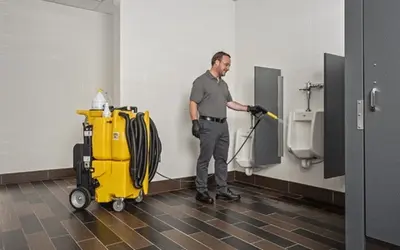
Cherokee County School District Takes Cleaning into Their Own Hands With Kaivac
Each of the district’s six high schools maintained their restrooms with a No-Touch Cleaning system from Kaivac.
Read more