
Are You Still Mopping?
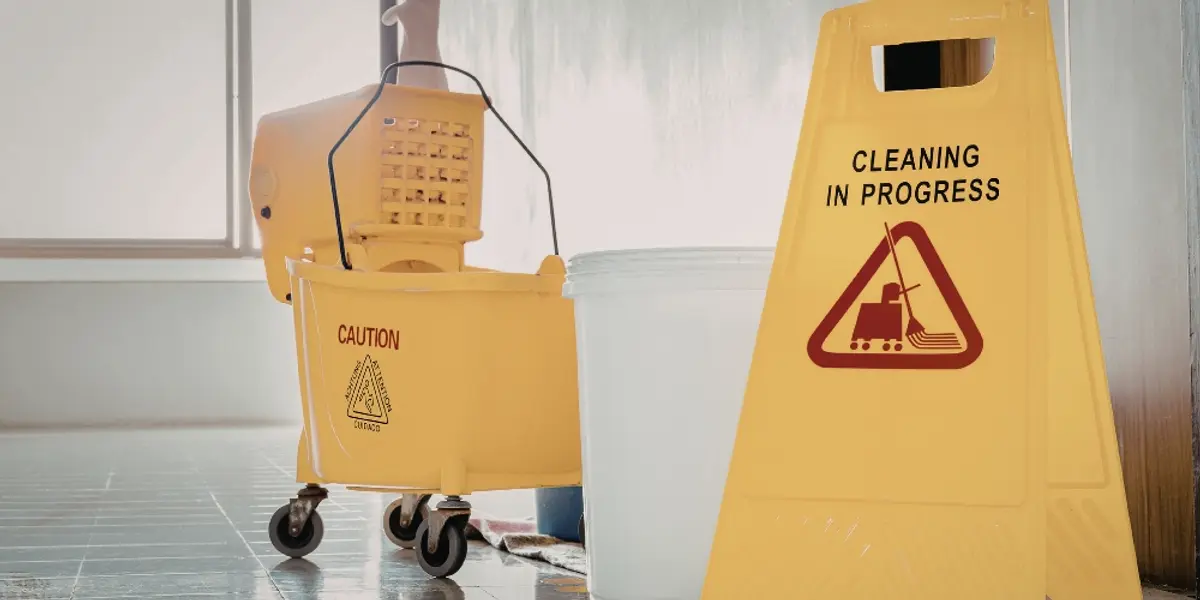
The science has spoken. Mops don’t remove soil or pathogens from floors.But the old-fashioned tools are really, really good at spreading a contaminated slurry of dirty mop water around your facility.
Are you plagued with sticky floors, smelly grout lines, or three inches of grime climbing above the baseboard onto the walls? Blame your mop. We at Kaivac have long urged cleaning teams to Stop the Mop, and that advice still holds.
Here’s why mopping doesn’t work along with a few better approaches.
Mops are Spreaders, Not Cleaners
Mops, particularly cotton string mops, cannot remove dirt. Adding a professional cleaning solution helps but only in the most ideal of conditions. This Cleaning & Maintenance Management article, by Robert Kravits lays it out. “A 2014 study published in Clinical Microbiology Review, researchers concluded ‘the water used for mop rinsing usually becomes increasingly contaminated during this process, especially if used repeatedly without changing or if surfaces are heavily soiled and/or have not been cleaned within the previous 24 hours. The water then serves a medium for spreading microbes around the environment.’
Mops are actually responsible for bacterial contamination on floors.
Source: University of Ottawa
Other cleaning professionals agree. Keith Schneringer, Senior Director of Marketing Jan/San and Sustainability, BradyPLUS, Las Vegas, says in this Contracting Profits article, “A cotton mop picks up the dirt and spreads it somewhere else, and every time it is dunked in the water, the water gets a little dirtier. After a while, you’re picking up dirt from the water and spreading it around.”
Mops Open You Up to Cross Contamination Risks
As they spread dirt instead of removing it, mops are a likely source of cross-contamination in your facility. Contamination comes in two forms: from the floor that is being cleaned and from the mop itself.
The "germiest" place in a public restroom is the floor, with about two million bacteria per square inch.
Floors, particularly restroom floors, are filled with bacteria. Other areas, like kitchen floors or entryways, carry other impurities like grease and grit. Mops pick up that contamination and transfer it to other floors. That’s why color coding has become so popular.
But even if your cleaning staff does everything right, just storing mops in the janitor’s closet makes a bad problem worse.
Within a week, a mop can grow a bacterial population of millions.
Source: Dr. Charles Gerba
Mops stored wet support bacterial growth to very high levels and could not be adequately decontaminated by chemical disinfection.
Source: Food Safety and Quality
Microfiber is Only Slightly Better
Microfiber is an improvement over cotton mop heads but comes with its own challenges. Sure, micofiber picks up more bacteria than a cotton mop but still leaves plenty behind. As this study, published in Infection Control Tips puts it “Regardless of the disinfectant type or cleaner used, none of the mops were able to consistently remove all the pathogens present on the floor surface. This suggests that there are opportunities for improvement in floor hygiene technologies….”
A brand-new microfiber mop removes only 50% of surface bacteria.
Source: American Society of Microbiology
Microfiber mops also require specific laundering. The water can’t be too hot, and the dryer can’t be too high. Microfiber can’t be washed with other kinds of fibers. And fabric softener will reduce their absorption capacity.
Single-use, disposable microfiber solves the washing challenges, but these mop heads are expensive and wasteful. Also, when used incorrectly, disposable microfiber can again cause cross-contamination.
Mops are not the Answer
This is why Kaivac urges BSCs and janitorial departments to Stop the Mop. The technology doesn’t work, promotes cross contamination, and causes musculoskeletal disorders from strenuous work positions.
Mops should not be used for routine cleaning.
Source: University of Maryland
Kaivac has better systems for every kind of floor you clean. From restrooms to kitchens to wide area hard surface flooring, Kaivac offers advanced tools that remove 99% of impurities while leaving surfaces dry and ready for work.
Still not convinced? Check out this testimonial from BTG Labs, or this one from West Virginia Association of Rehabilitation Facilities. Or maybe this Mopumentary from a mop’s point of view will help. And when you’re ready, Kaivac is here to help you Stop the Mop.
Amy Milshtein
Amy Milshtein is a seasoned writer and content strategist at Kaivac, Inc., where she combines her passion for storytelling with her extensive knowledge of cleaning technologies. With over a decade of experience in the industry, Amy has become an expert in translating complex technical concepts into engaging and accessible content. She holds a degree in English and Communication from Rutgers, the State University of NJ.
Related Posts

Delight Clients While Saving Time and Money with UniVac
Behind every serene dining room is a kitchen full of grease and spills. Here is how the UniVac helps corporate dining programs clean faster, cut costs, and win over their own staff in the process.
Read more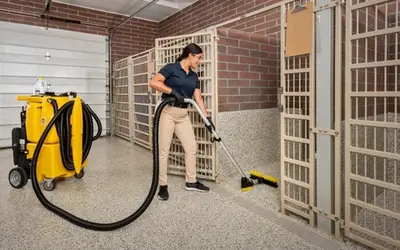
The Prodigal Pooch Loses Odors, Gains Clients Thanks To No-Touch Cleaning System
The change at The Prodigal Pooch was immediate. After just two days of using No-Touch Cleaning the look, smell, and feel in the kennel rooms improved. Two weeks later the odor was completely gone.
Read more